
Protecting your outdoor security cameras starts with choosing the right CCTV Camera Covers. Whether it’s heavy monsoon rain, scorching summer heat, or dusty winds, a good weatherproof cover protects your cameras. It helps keep them safe in all kinds of weather. It helps them work well all year round. From dome housings to bullet camera enclosures, the right cover protects the camera and extends its life. It also improves video quality. In this guide, we cover everything you need to know to make the best choice.
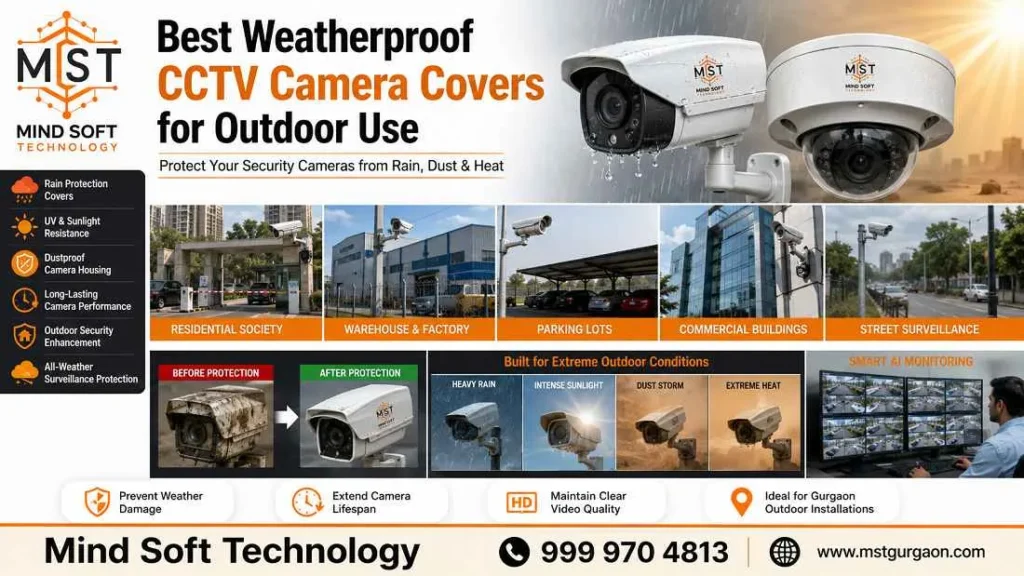
CCTV Camera Protection Cover
Why CCTV Camera Protection Covers Are Important
Choosing the right CCTV camera covers is the first and most important step to secure your outdoor surveillance setup. An outdoor CCTV camera cover is a protective housing. It shields cameras from rain, snow, dust, extreme heat or cold, and tampering. Without a proper cover, even the best cameras can fail fast in India’s changing weather. It can include blazing summer heat and heavy monsoon rain. At Mind Soft Technology, we know protecting your investment starts with the right cover. Call us at 999 970 4813 to get the best price today.
Protection Against Dust, Sunlight and Physical Damage
Outdoor CCTV cameras face constant stress from snow, rain, heat, UV rays, dust, and humidity. Protective covers are an initial line of defense by shielding the camera from such elements. UV rays can cause plastic parts to weaken, fade, and become vulnerable to cracks over time. The best camera covers are made of UV-resistant material to protect against sun-induced damage. Dust buildup on outdoor housings could cause excessive heat. It can also cause damage to weatherproof seals. Therefore, there is a need for a strong cover to ensure long-term durability.
CCTV Camera Rain Cover
Benefits of Rain Covers for Outdoor CCTV Cameras
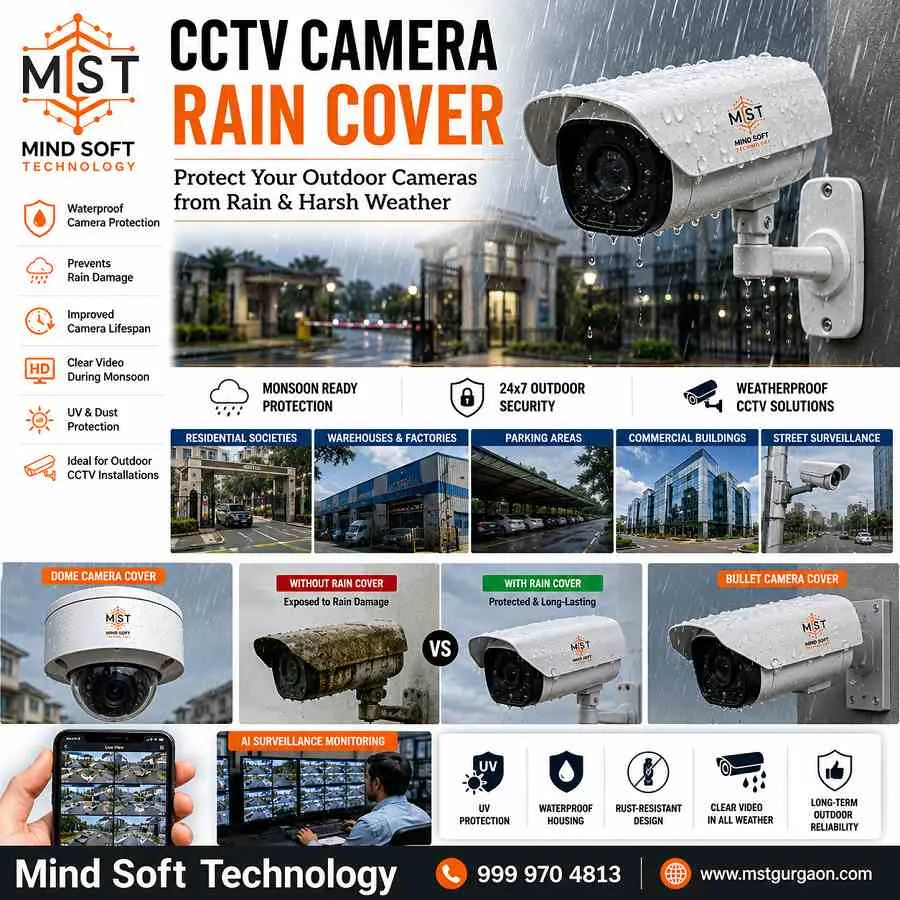
A dedicated CCTV camera rain cover protects your surveillance equipment from heavy monsoon rains and water jets. Waterproof CCTV camera enclosures help keep the camera’s IP (Ingress Protection) rating. This rating is often IP66 or higher. They protect against water and dust entry. An IP66 or IP67-rated cover is fully weatherproof. It is an excellent choice for most outdoor environments. By protecting cameras from moisture and bad weather, these covers prevent damage. They help businesses and homeowners monitor their property all day.
Features to Look for in a Waterproof Camera Cover
When choosing waterproof camera covers, be sure to verify the IP ratings first. For outdoor use, select covers that have at least an IP54 rating. This helps keep dust out and guards against water jets in any direction. Sealed gaskets, high-impact materials, and UV-resistant materials are all equally important. Certain enclosures are also equipped with power distribution or cable glands. This results in a cleaner, simpler installation. The most reliable manufacturers usually offer a 3-5-year warranty. This indicates confidence in the quality of their products.
Types of Weatherproof CCTV Camera Covers
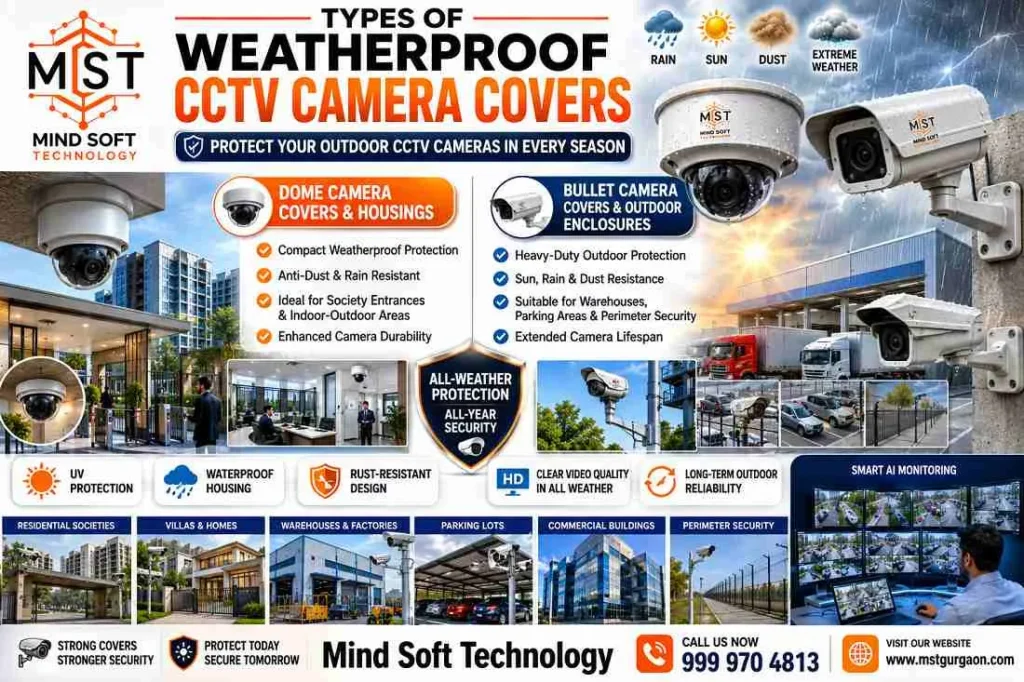
Dome Camera Covers and Housings
Dome security cameras are popular for storefronts, parking lots, and homes. They are well-known for being vandal-resistant. They also offer a hidden weather advantage. The dome shape sheds water and helps prevent ice buildup in cold seasons. Look for IK10 ratings on dome covers if you worry about hail or flying debris during storm season. The dome cover must be cleaned inside and out. Dust or dirt on either side can reduce image clarity. It can also cause IR glare in night vision mode.
Bullet Camera Covers and Outdoor Enclosures
Bullet cameras are of a long, round shape and are usually installed outdoors. They are ideal for viewing large open areas like parking lots and driveways. They also work well along building edges. Covers for bullet cameras provide additional protection from dust, rain, or UV damage. The covers and housings made by these help to make your camera more robust. They also reduce wear and tear. They are the ideal choice for areas that have changing conditions and frequent bad weather. Bullet camera covers that are weatherproof are typically made of stainless steel or other sturdy materials. They are durable and provide security.
How to Choose the Best CCTV Camera Cover
Material Quality and Weather Resistance
Material quality is the foundation of any good weatherproof CCTV cover. Covers made from high-impact materials with sealed gaskets provide the most reliable protection. A mid-range housing offers good weatherproofing.
It also has moderate anti-vandal features. This provides a strong balance of protection, lifespan, and value.
It works well for both homes and businesses. Covers should be made of UV-resistant materials to withstand prolonged sun exposure. Proper ventilation is also needed to stop the camera from overheating inside the enclosure.
Compatibility with Different Camera Models
Before buying a cover, make sure it fits your camera model and lens size. This helps prevent blocks in your field of view. Universal camera covers fit more CCTV camera models than proprietary enclosures. Covers with modular designs and standardised mounting reduce installation time and costs significantly. Also check if the cover supports power and cable integration. Some enclosures have built-in cable management for a neat, professional installation.
Benefits of Using Weatherproof CCTV Covers
Extended Camera Lifespan
One of the biggest benefits of weatherproof CCTV covers is that they help your camera last longer. The cover and housing make your camera tougher and reduce wear and tear. This helps it work well in hot summers and cold winters. Outdoor cameras face harsh weather all the time so that they can be damaged without proper protection. A quality cover helps your surveillance system work all year. It protects your investment and reduces frequent replacements.
Improved Video Quality in Harsh Weather Conditions
Weatherproof security cameras are designed to give clear, high-quality images in any weather. Rain and fog can block a weaker camera’s lens. That is why good covers and high-resolution cameras matter. Regular upkeep of seals and housings helps block moisture and dust that can blur images. Cameras with quality covers also show fewer false alarms from blocked or unfocused motion detection. This keeps your security system accurate and effective.
Installation Tips for CCTV Camera Covers
Proper Positioning for Maximum Protection
To maximize the use of your camera cover, the position is just as important as the design of your cover. Cameras should be placed under the eaves or on overhangs if possible. This provides a natural layer of protection against weather. The covers should be large enough to protect the camera without blocking the lens or the view. Beware of placing camera lenses in sunlight that is intense for extended periods. Even UV-resistant covers can be effective when they’re not the only protection. Make sure the cover lines up with the camera, as the manufacturer instructs.
Securing Covers Against Wind and Rain
In areas that experience extreme weather conditions, such as severe storms, heavy rain, and high levels of humidity, be sure to secure camera covers. They should be prevented from moving or becoming loose. Be sure to use weather-proof mounts and fasteners made specifically for use outdoors. Be sure that the entry points to cables are adequately sealed. This prevents moisture from passing through the cracks. Examine all seals and gaskets after installation. Make sure to check them again after any major storm. Make sure they’re in good condition and have an airtight seal.
Maintenance and Care of CCTV Camera Covers
Regular Cleaning and Inspection
Regularly scheduled cleaning and inspections are crucial to ensure that your CCTV cameras are operating properly. Outdoor cameras accumulate dust, pollen, insect residue, rain spots, and bird droppings over time. This can affect image clarity. Cleaning schedules for monthly or quarterly tend to suffice. Outdoor cameras that are in dusty or wooded environments may require regular cleaning. Clean the outside of the enclosure with an easy brush, compressed air, or a moist microfiber towel. For greasy buildup, use warm, soapy water. Dry the housing fully with a microfiber cloth before reassembly.
Replacing Damaged Covers and Housings
Skipping basic maintenance may cause lasting lens damage, rust, or moisture buildup inside dome cameras. These problems can reduce the quality of images and reduce the life of your camera. Check the weatherproof seals and covers often for damage or wear. This can let moisture get inside. If the cover is damaged, broken, warped, or shows UV damage, replace it as soon as you notice. Silica gel packets inside the housing can absorb moisture in humid conditions. For hard-to-reach installations, consider hiring professional security camera technicians. Request them to conduct regular inspections and maintenance.
Conclusion
Protect Your Outdoor CCTV Investment with the Right Cover
Make sure you have the best weatherproof camera covers for your CCTV. They safeguard your outdoor equipment. They help keep your footage clean and safe throughout the year. With UV shields and water resistance, to vandal-proofing and dust sealing, the proper cover can prolong the lifespan of your camera. It improves video quality and helps your security system work well, even in India’s harshest conditions.
📞 Call Mind Soft Technology at 999 970 4813 — We offer the best prices on premium CCTV camera covers and complete outdoor security solutions. Get expert advice, competitive pricing, and professional installation support. Order today and protect your investment with confidence!
Whether you need dome camera covers, bullet camera enclosures, or full weatherproof housings, Mind Soft Technology can help. Our team is ready to help you pick the best CCTV camera covers. We will match them to your camera model, environment, and budget. Don’t wait for your cameras to fail. Protect them today with the right coverage from Mind Soft Technology.
FAQs – Best Weatherproof CCTV Camera Covers
What is a weatherproof CCTV camera cover?
A weatherproof cover is a case made to protect outdoor cameras from rain, dust, UV light, and temperature changes. It helps keep image quality clear.
Do dome covers reduce vandalism?
Yes. High-impact dome covers with an IK10 rating resist tampering and impact. This makes them ideal for vandal-prone locations.
How often should I clean camera covers?
Clean exterior covers monthly to quarterly, based on the environment. Clean more often in dusty or coastal areas to avoid image degradation.
Will a cover block my camera’s field of view?
Not when properly selected and installed. Choose a cover sized for your lens and test the field of view before final mounting.
Are all covers compatible with every camera model?
No. Universal covers exist. Always check size, mounting points, and cable access. Modular housings offer the widest compatibility.
Can covers prevent condensation inside the housing?
Properly sealed covers with desiccant packs or ventilation can reduce condensation. Choose enclosures with good seals and breathers for humid climates.
When should I replace a damaged cover?
Replace any cracked, warped, or UV-damaged cover at once.
This helps prevent moisture or dust from getting in.
It also protects the lens and keeps the warranty valid.